
Elevator Market 研究

The elevator industry has experienced significant growth lately, and to keep up with this incredible rise and remain competitive, market research is crucial for companies operating within this sector.
With comprehensive elevator market research, businesses can discover invaluable customer insights and recognize new trends or technologies that will help them stay ahead of the competition and thrive in this competitive industry.
What is elevator market research?
Elevator market research helps companies to make informed decisions about their product offerings, services, and marketing plans. This type of analysis involves gathering and analyzing data related to trends in the field, the size of its industry players, share within it compared to other markets, anticipating challenges that may come up, and other factors affecting growth opportunities.
This type of analysis enables businesses to make smarter decisions about their investment strategies and product developments for greater ROI. By taking advantage of the intelligence gathered through elevator market research, businesses can obtain a competitive edge in their field and put them on track to success over time.
Additionally, the elevator industry is an ever-expanding sector with a wide range of products, like passenger and freight elevators, escalators, and moving walkways. With the growing urbanization across the world and the need for greater mobility in buildings, demand in this field has been on an upsurge. Thanks to recent technological advancements, today’s elevators are more reliable than ever before. They not only ensure safety but also offer smarter operations.
Elevator Market Research: How Leading OEMs Capture the Modernization Opportunity
The global elevator industry is entering its most profitable phase in a generation. New equipment sales remain cyclical, but the installed base now generates the majority of OEM profit. Service contracts, modernization, and connected maintenance compound at margins that dwarf new unit economics. Elevator market research is how the leading manufacturers and component suppliers identify where that compounding accelerates next.
The opportunity is structural. Aging vertical transportation stock in mature markets, dense urbanization across Asia and the Gulf, and stricter accessibility codes are converging. The firms reading these signals correctly are repositioning around aftermarket revenue strategy and installed base analytics rather than unit volume.
Why Elevator Market Research Now Drives Strategic Decisions
Otis, KONE, Schindler, TK Elevator, Mitsubishi, Hitachi, and Fujitec each derive a growing share of operating profit from service portfolios. The unit economics are clear. A new mid-rise installation produces a one-time margin. The maintenance contract attached to it produces recurring revenue for twenty to thirty years, with modernization cycles layered on top.
Elevator market research quantifies the levers inside that economic model. Portfolio density by metro, contract retention rates against independent service providers (ISPs), modernization addressable base by vintage, and IoT-enabled service uplift are the variables that move enterprise value. VPs of strategy at Fortune 500 building systems firms now treat installed base intelligence as a board-level input.
SIS International Research has observed across B2B expert interviews with senior executives at vertical transportation OEMs and component suppliers that the most profitable players treat the installed base as a portfolio asset, not a service obligation. They map every unit by age, controller generation, code compliance gap, and ISP encroachment risk, then prioritize modernization outreach using predictive maintenance sizing rather than calendar cycles.
The Modernization Wave Reshaping Aftermarket Revenue Strategy
A significant share of the global installed base predates modern energy codes, EN 81-20/50 safety standards, and current accessibility requirements. In the United States, ASME A17.1 updates and state-level door restrictor mandates have pulled forward modernization demand. In the EU, the Lift Directive and Machinery Regulation are doing the same. In Japan and Korea, seismic retrofit codes are driving controller and brake replacements.
The leading OEMs are not selling modernization as a compliance product. They are selling it as a building-value uplift, quantified through tenant satisfaction data, energy consumption reduction, and elevator downtime metrics. That repositioning requires evidence. Elevator market research provides it through structured property manager interviews, REIT capital planning audits, and facilities engineer panels.
Component suppliers are repositioning in parallel. Drives, controllers, door operators, regenerative braking systems, and destination dispatch platforms are being sold directly into the modernization channel. Companies like Magnetek, Smartrise, and GAL Manufacturing have built businesses around the ISP and small-OEM segment that the majors historically underserved.
Connected Vertical Transportation and the Data Monetization Layer
KONE 24/7 Connected Services, Otis ONE, Schindler Ahead, and TK Elevator MAX have shifted the service conversation from reactive repair to predictive maintenance. The economics matter. A connected portfolio reduces truck rolls, extends mean time between failures, and creates switching costs that suppress ISP retention.
The strategic question for VPs is which connected service tier wins which building segment. Class A office towers, Class B commercial, multifamily residential, hospital, and transit hub each have different downtime tolerances, capital cycles, and decision-maker structures. Elevator market research segments these buyer groups and tests willingness to pay for tiered service offerings.
In SIS International’s competitive intelligence work across building systems verticals, the highest-retention service portfolios share a common pattern. They bundle connected diagnostics with guaranteed response time SLAs and quarterly performance reporting that property managers can present to building owners. The data product is the retention mechanism, not the diagnostic itself.
Geographic Asymmetry: Where Growth Concentrates
China remains the largest new equipment market by volume but the most contested on margin. India, Vietnam, Indonesia, and the Philippines are the next density build-out, with Tier 1 metros driving high-rise demand. Saudi Arabia, the UAE, and Egypt are expanding on giga-project pipelines. The mature markets — North America, Western Europe, Japan — are modernization-led.
Each geography requires different research approaches. New equipment markets demand developer interviews, architect specification mapping, and procurement analysis at the general contractor level. Mature markets require property manager segmentation, REIT capital planning intelligence, and ISP competitive mapping.
| Market Type | Profit Driver | Primary Research Method |
|---|---|---|
| Mature (US, EU, Japan) | Modernization and service | Property manager and REIT interviews |
| High-Growth (India, SEA) | New equipment volume | Developer and architect mapping |
| Giga-Project (GCC) | High-rise specification wins | Consultant and EPC interviews |
| Saturated (China) | Service contract conversion | Building owner panel research |
Source: SIS International Research
The Competitive Intelligence Gap Most Firms Underestimate
The independent service provider channel is the most underanalyzed segment in vertical transportation. ISPs hold a meaningful share of the maintenance market in North America and growing positions in Europe. They win on price, local responsiveness, and multi-brand capability. They lose on connected services and parts access.
The OEMs that defend share against ISPs are running structured win/loss analysis on every contract renewal. They know which ISP took which building, at what price, with which value proposition. The OEMs that lose share treat each defection as an isolated event. Elevator market research closes that gap through systematic ISP competitive mapping and property manager defection interviews.
The SIS Approach to Elevator Market Research
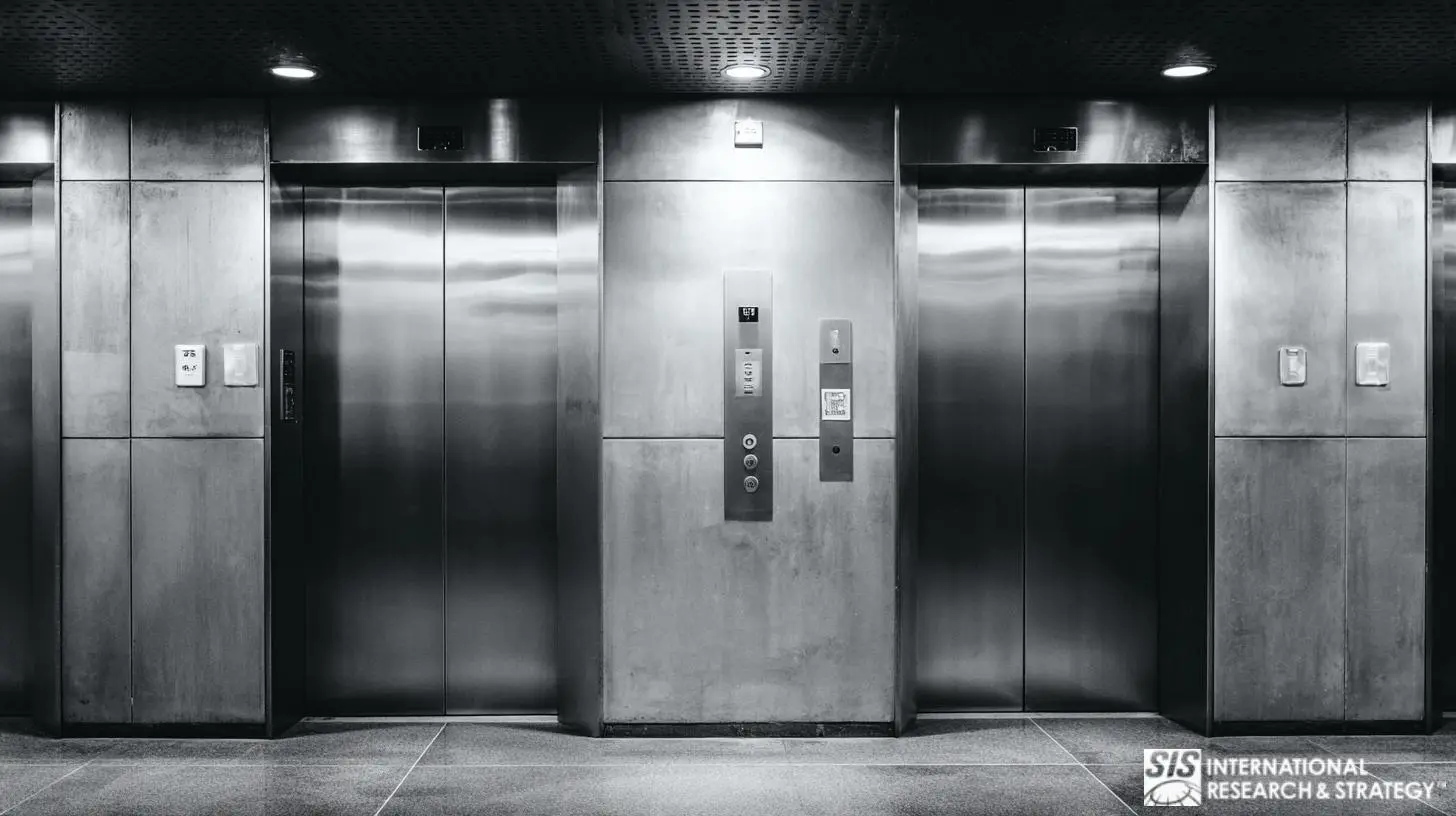
SIS International Research conducts elevator market research through four integrated methodologies: B2B expert interviews with property managers, facilities engineers, REIT capital planners, and OEM channel partners; competitive intelligence on OEM and ISP positioning by metro; market entry assessments for component suppliers and connected services platforms; and voice-of-customer programs that quantify modernization triggers and service contract switching behavior.
The output is decision-grade. VPs of strategy use it to prioritize metro investment, redesign service tiers, justify modernization sales models, and defend installed base against ISP encroachment. Elevator market research, executed correctly, is the input that separates the OEMs compounding aftermarket margin from those still chasing unit volume.
Key Questions

Q1: What is elevator market research?
Elevator market research is structured intelligence on the vertical transportation industry covering new equipment demand, installed base composition, modernization opportunity, service contract economics, and competitive positioning across OEMs, component suppliers, and independent service providers.
Q2: Why is the elevator aftermarket more profitable than new equipment?
A new installation generates a one-time margin, while the attached maintenance contract produces recurring revenue for twenty to thirty years. Modernization cycles layer additional high-margin revenue on top, making installed base portfolios the dominant profit driver for major OEMs.
Q3: How do leading OEMs defend market share against independent service providers?
The leaders run structured win/loss analysis on every contract renewal, bundle connected diagnostics with response-time SLAs, and use predictive maintenance data as a switching-cost mechanism that ISPs cannot easily replicate.
Q4: Which geographic markets offer the strongest elevator industry growth?
India, Vietnam, Indonesia, and the Philippines lead new equipment volume growth. The GCC drives high-rise specification opportunity. North America, Western Europe, and Japan offer the largest modernization addressable base.
Q5: What methodologies does SIS International use for elevator market research?
SIS uses B2B expert interviews with property managers and facilities engineers, competitive intelligence on OEM and ISP positioning, market entry assessments for component suppliers, and voice-of-customer programs that quantify modernization and service-switching behavior.
關於 SIS 國際
SIS國際 提供定量、定性和策略研究。我們為決策提供數據、工具、策略、報告和見解。我們也進行訪談、調查、焦點小組和其他市場研究方法和途徑。 聯絡我們 為您的下一個市場研究項目。

 ZH_HK
ZH_HK  EN
EN  AR
AR  ZH
ZH  NL
NL  FR
FR  DE
DE  IT
IT  JA
JA  KO
KO  PL
PL  PT
PT  ES
ES