
Pesquisa de Mercado Agritech
O que é Agritech?
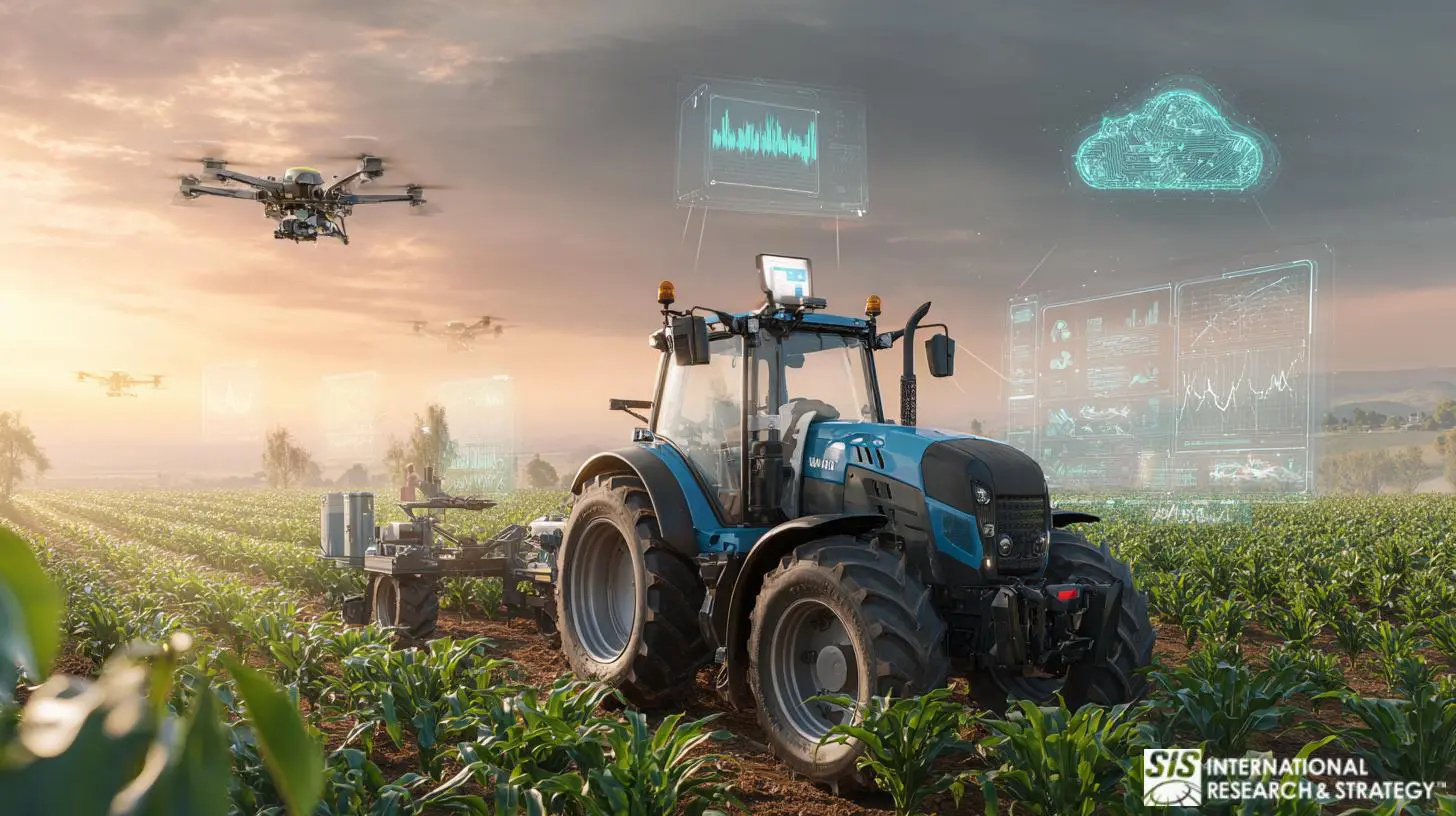
Todos os humanos precisam de comida. Então, a produção de alimentos tem que ser constante e suficiente para abastecer a todos. Os recursos são, obviamente, limitados. Devido a isto, os agricultores têm de desenvolver métodos para garantir que produzem alimentos suficientes. Os processos também devem ser eficientes, seguros e limitar o desperdício. Agritech, ou tecnologia agrícola, utiliza tecnologia para desenvolver o campo da gestão de terras. Ele fornece uma melhoria em muitas áreas desse campo. Por exemplo, ajuda na preparação da terra para a agricultura, no uso de fertilizantes e até na aquicultura. Os agricultores precisam de melhorar muitos dos métodos antigos e a Agritech levará a indústria para o futuro.
Agritech Market Research: How Leading Firms Capture the Next Wave of Farm-Level Value
Agritech market research has become the decisive input for capital allocation across precision agriculture, biologicals, controlled environment systems, and farm management software. The category rewards investors who understand grower economics at the field level, not those who model from desk research alone.
The opportunity is large and the competitive field is still forming. Strategic acquirers including John Deere, Bayer Crop Science, Corteva, CNH Industrial, Yara, and Syngenta are reshaping their portfolios around digital agronomy, variable rate prescriptions, and outcomes-based input pricing. Private equity is consolidating regional distribution. The firms winning this cycle treat agritech market research as a hard discipline grounded in installed base analytics, dealer channel economics, and direct grower interviews across cropping systems.
Why Agritech Market Research Demands Field-Level Evidence
Grower decisions do not follow consumer logic. A row crop operator in Iowa, a smallholder in Maharashtra, and a Brazilian soy producer in Mato Grosso evaluate the same nitrogen sensor through three different lenses: agronomic ROI per acre, working capital cycle, and dealer financing terms. Desk research collapses these distinctions. Primary research surfaces them.
The conventional approach benchmarks adoption curves against published penetration rates. The better approach segments the installed base by equipment vintage, telematics enablement, and agronomist relationship. A planter compatible with section control commands a different prescription strategy than one retrofitted three seasons ago. Without that resolution, total addressable market figures overstate near-term revenue by wide margins.
SIS International Research has consistently observed that agritech adoption forecasts built from OEM dealer interviews and crop consultant panels diverge sharply from those built from secondary sources, with the gap widening in markets where independent agronomists, not retailers, drive purchase decisions.
The Categories Reshaping Agritech Investment
Five categories are absorbing the majority of strategic capital. Each has a distinct buyer, a distinct economic logic, and a distinct research method.
Precision agriculture hardware and retrofits. Section control, variable rate technology, and ISOBUS-compliant implements. Buyer is the OEM procurement team or large-acre operator. Research method centers on bill of materials optimization and aftermarket revenue strategy across dealer networks.
Farm management software and agronomic analytics. Climate FieldView, Granular, xarvio, and dozens of regional platforms. Buyer is the grower or the input retailer subsidizing the seat. Research requires win/loss analysis and net revenue retention benchmarking against incumbent paper-based agronomy.
Biologicals and biostimulants. Pivot Bio, Indigo Ag, and the Bayer-Ginkgo joint ventures. Buyer is the agronomist who recommends the product. Efficacy data must hold across soil types, which makes multi-region trial benchmarking the core research output.
Controlled environment agriculture. Vertical farming, greenhouse automation, and indoor produce. Buyer is the retail category manager evaluating supply continuity against unit economics. Research centers on total cost of ownership versus field-grown alternatives.
Autonomy and robotics. Autonomous tractors, weeding robots from companies such as Carbon Robotics and FarmWise, and orchard platforms. Buyer evaluates labor displacement against capex and uptime. Research requires installed base analytics and predictive maintenance sizing.
Where Agritech Market Research Creates Defensible Advantage
Three research disciplines separate firms that allocate capital well from those that misread the category.
Dealer and distributor channel economics. Independent dealer networks for John Deere, AGCO, and Kubota operate on margin structures that determine which agritech products reach the grower. A software product that compresses dealer margin will fail at scale regardless of agronomic merit. Mapping dealer P&L by region clarifies which go-to-market models survive contact with the channel.
Grower segmentation by operation archetype. Acreage alone is a weak segmentation variable. Operation archetype, defined by crop mix, owned versus rented land, generational succession status, and primary information source, predicts technology adoption with far greater accuracy. B2B expert interviews with growers and crop consultants surface these archetypes.
Regulatory and reshoring feasibility. EU Farm to Fork targets, EPA biologicals pathways, and India’s PM-KISAN digital infrastructure each reshape agritech demand on different timelines. Reshoring of fertilizer and crop protection manufacturing is altering supplier qualification audit requirements across North America.
In structured expert interviews conducted by SIS International with senior agronomists, dealer principals, and OEM product managers across North America, Latin America, and Western Europe, the most consistent pattern is that agritech products achieving durable adoption are those embedded into existing agronomic workflows rather than those requiring growers to adopt new software disciplines.
The SIS Approach to Agritech Market Research
SIS International applies four primary methodologies to agritech engagements. B2B expert interviews with growers, agronomists, dealer principals, and OEM product managers establish ground truth on adoption barriers. Competitive intelligence on patent filings, M&A activity, and field trial disclosures clarifies the strategic positioning of biologicals and seed technology entrants. Market entry assessments evaluate country-specific regulatory pathways, distribution density, and grower financing infrastructure. Voice of customer programs measure satisfaction and switching intent across software platforms and input brands.
The output is decision-grade evidence. A market entry assessment for a European biologicals company entering Brazil clarifies which states warrant first launch, which distribution partners hold the relationships with cooperatives, and which trial protocols satisfy local agronomist scrutiny. A competitive intelligence study for an autonomy entrant identifies which crop categories offer the cleanest labor displacement economics.
The Agritech Opportunity Matrix

SIS uses a two-axis framework to prioritize agritech investment opportunities: Grower Economic Clarity on one axis and Channel Access Difficulty on the other.
| Quadrant | Profile | Strategic Move |
|---|---|---|
| High Clarity, Low Difficulty | Variable rate inputs, telematics retrofits | Scale through existing dealer networks |
| High Clarity, High Difficulty | Biologicals with proven ROI | Acquire distribution or partner with cooperatives |
| Low Clarity, Low Difficulty | Farm management software | Bundle with input or equipment purchase |
| Low Clarity, High Difficulty | Standalone autonomy platforms | Pilot with large operators before scale capex |
Source: SIS International Research
What Separates the Firms Winning This Cycle

The firms capturing disproportionate value in agritech share three habits. They commission primary research before, not after, term sheets. They segment growers by archetype rather than acreage. They map dealer economics with the same rigor applied to end customer demand.
Agritech market research is not a checkbox in the diligence process. It is the discipline that distinguishes investors who understand the field from those who only model the market.
Sobre SIS Internacional
SIS Internacional oferece pesquisa quantitativa, qualitativa e estratégica. Fornecemos dados, ferramentas, estratégias, relatórios e insights para a tomada de decisões. Também realizamos entrevistas, pesquisas, grupos focais e outros métodos e abordagens de Pesquisa de Mercado. Entre em contato conosco para o seu próximo projeto de pesquisa de mercado.

 PT
PT  EN
EN  AR
AR  ZH
ZH  ZH_HK
ZH_HK  NL
NL  FR
FR  DE
DE  IT
IT  JA
JA  KO
KO  PL
PL  ES
ES