
Frontier Market Country Market Research
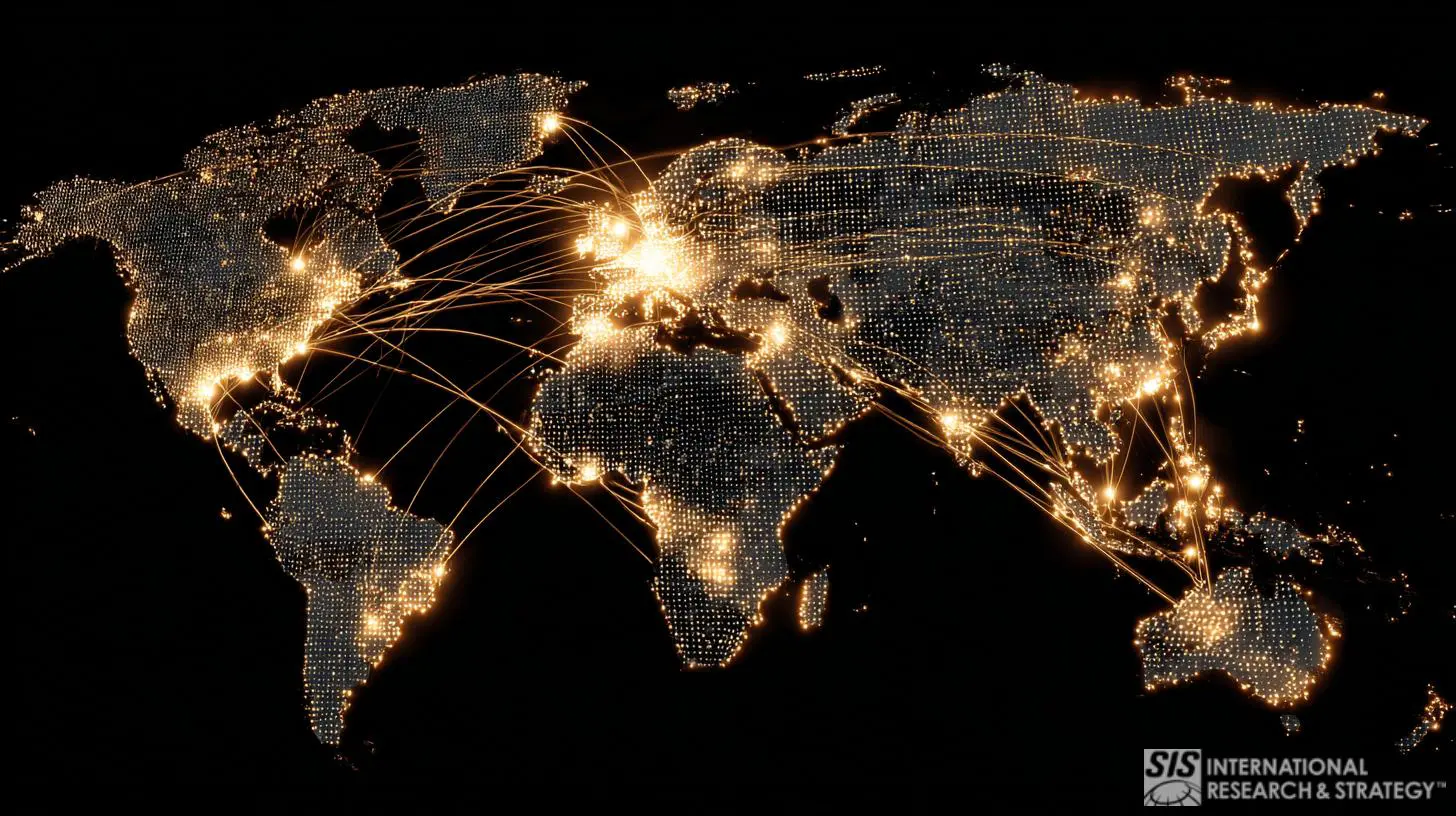
Nella moderna economia globale, i mercati di frontiera rappresentano un vasto bacino di potenziale non sfruttato, messo in ombra dalle controparti dei mercati emergenti e sviluppati. Tuttavia, questi paesi offrono una miscela unica di opportunità e sfide che possono attrarre gli investitori che guardano oltre i mercati tradizionali in cerca di crescita e diversificazione.
Ecco perché il ruolo cruciale delle ricerche di mercato nei paesi dei mercati di frontiera consiste nell'offrire approfondimenti per il processo decisionale nei mercati in cui le informazioni sono spesso limitate e piene di pregiudizi.
Comprendere le ricerche di mercato sui paesi del mercato di frontiera
The term “frontier market” describes Paesi that are in the transitional phase between developing and emerging market status. They are characterized by their developing economies, capital markets, and financial systems. Thus, understanding the nuances of frontier market country market research is essential for businesses and investors aiming to harness the opportunities these markets offer while navigating the inherent challenges.
Frontier Market Country Market Research: How Industrial Leaders Build Conviction Before Capital Commits
Frontier markets reward operators who arrive with evidence, not assumptions. Industrial firms entering Vietnam, Bangladesh, Kenya, Côte d’Ivoire, Uzbekistan, or Ethiopia consistently outperform peers when their entry thesis is grounded in primary fieldwork rather than secondary aggregates. Frontier market country market research is the discipline that separates companies building durable installed base from those repatriating losses three years in.
The opportunity is structural. Industrial demand in frontier economies is moving up the value chain. Local OEMs are integrating vertically, infrastructure pipelines are accelerating, and reshoring flows from China are creating new supplier qualification audits across South and Southeast Asia. The firms capturing this growth share one trait: they invested in country-level intelligence before the term sheet, not after.
Why Frontier Market Country Market Research Outperforms Desk Analysis
Secondary data in frontier economies is thin, lagged, and frequently contradictory. Customs records understate informal cross-border trade. Industry association membership lists exclude the bulk of mid-tier suppliers. Government statistics on installed base and capacity utilization rarely reconcile with what plant managers report directly.
The firms that win commission ground-truth research. That means structured B2B expert interviews with procurement directors at local OEMs, site visits to industrial parks in Hai Phong or Adama, and supplier qualification audits conducted in-language. SIS International Research has consistently found that bill of materials assumptions modeled from desk research understate true landed cost in frontier markets by a meaningful margin once import duty fragmentation, inland logistics, and informal compliance costs are reconciled against actual plant-level data.
The mechanism matters. Frontier market pricing is set by relationships and volume tiers invisible to public databases. A Tier 1 automotive supplier entering Morocco discovered through expert interviews that the published OEM procurement specifications excluded a parallel qualification track reserved for politically connected local champions. That insight reshaped the entry sequence and saved eighteen months.
The Five Variables That Determine Frontier Market Entry Outcomes
Across decades of B2B industrial engagements, five variables explain most of the variance in frontier market entry performance. Each requires primary research to quantify.
Installed base economics. Aftermarket revenue strategy fails when the assumed installed base is wrong. Counting deployed units in Nigeria’s power generation segment or Vietnam’s textile machinery base requires field census work, not registry pulls.
Procurement decision architecture. Who actually signs in a Bangladeshi conglomerate or a Kenyan parastatal? OEM procurement analysis in frontier markets surfaces decision rights that diverge sharply from the org chart.
Total cost of ownership realism. Energy reliability, spare parts lead time, and technician availability move TCO calculations more than equipment price. Buyers know this. Sellers often do not.
Supplier qualification depth. Reshoring feasibility hinges on whether local suppliers can hold tolerance, document traceability, and pass customer audits. This is observable only on the floor.
Regulatory and standards drift. Frontier markets adopt EU, GCC, or Chinese standards selectively. The selection pattern predicts which product variants will qualify and which will not.
How Leading Industrial Firms Sequence Frontier Market Entry
The conventional approach treats frontier market entry as a single decision: enter or wait. Leading firms treat it as a staged investment where each stage retires a specific risk and unlocks the next tranche of capital.
Stage one is opportunity sizing through expert interviews and trade flow reconstruction. Stage two is competitive intelligence on the three to five players already operating, including their margin structure and channel economics. Stage three is supplier and distributor due diligence with on-site audits. Stage four is a contained pilot with predefined kill criteria. Caterpillar’s measured expansion across East Africa and Schneider Electric’s phased build-out in Southeast Asia both reflect this sequencing.
In structured expert interviews SIS International has conducted with senior industrial procurement leaders across frontier Asia and Sub-Saharan Africa, the strongest predictor of successful market entry was not capital deployed but the depth of pre-entry primary research on local channel economics and aftermarket revenue strategy.
The SIS Frontier Market Readiness Framework
| Dimension | Low Readiness Signal | High Readiness Signal |
|---|---|---|
| Demand Evidence | Secondary reports only | Direct buyer interviews with named accounts |
| Channel Economics | Assumed margin stack | Distributor P&L reconstructed from primary data |
| Supplier Base | Trade show contact list | Audited supplier qualification dossier |
| Regulatory Path | Generic country risk score | Product-specific standards mapping |
| Aftermarket Plan | Sales-led model | Installed base analytics with service economics |
Source: SIS International Research
Where Frontier Industrial Demand Is Concentrating

Three patterns are reshaping where industrial capital should look. First, the China-plus-one supplier diversification is moving real volume into Vietnam, India, Indonesia, and Mexico, with second-order demand pulling into Bangladesh, the Philippines, and Egypt. Industrial automation, material handling, and power infrastructure suppliers are the direct beneficiaries.
Second, African industrial corridors anchored by ports such as Lekki, Mombasa, and Tangier Med are creating concentrated demand zones where logistics, packaging machinery, and food processing equipment suppliers can build installed base efficiently. Companies including Bühler and Siemens have moved early on this pattern.
Third, Central Asian economies are attracting upstream investment in mining, agriculture processing, and energy that creates a predictable equipment replacement cycle within five to seven years. Predictive maintenance sizing in these markets favors firms that establish service infrastructure now.
What Primary Research Surfaces That Models Cannot

Models extrapolate. Primary research discovers. SIS International’s competitive intelligence work across frontier industrial markets has repeatedly identified pricing corridors, channel kickback structures, and unofficial qualification pathways that materially change the entry business case once factored into the model.
Three examples illustrate the gap. A European pump manufacturer entering East Africa found that the dominant local distributor held exclusive informal arrangements with two ministries, making direct sales efforts uneconomic until the channel question was resolved. A North American electrical equipment firm assessing Southeast Asia discovered that local OEM bill of materials specifications had quietly shifted toward Chinese standards, requiring product re-engineering not captured in any published regulation. A Japanese industrial automation provider sizing the Indian market learned that the real buying center sat with system integrators, not the end user.
None of these insights existed in any database. All three changed the entry decision.
Building the Internal Case for Frontier Market Investment

VP-level sponsors of frontier market entry compete for capital against safer domestic projects. The case wins when the evidence is unimpeachable. That means named buyer interviews, audited supplier files, reconstructed competitor economics, and a TCO model that survives finance committee scrutiny.
Frontier market country market research is the input that converts ambition into approved capital. The firms building durable positions in Vietnam, Nigeria, Bangladesh, and Uzbekistan are not the largest. They are the ones who arrived with evidence the others lacked.
A proposito di SIS Internazionale
SIS Internazionale offre ricerca quantitativa, qualitativa e strategica. Forniamo dati, strumenti, strategie, report e approfondimenti per il processo decisionale. Conduciamo anche interviste, sondaggi, focus group e altri metodi e approcci di ricerca di mercato. Contattaci per il tuo prossimo progetto di ricerca di mercato.

 IT
IT  EN
EN  AR
AR  ZH
ZH  ZH_HK
ZH_HK  NL
NL  FR
FR  DE
DE  JA
JA  KO
KO  PL
PL  PT
PT  ES
ES